

Spread Designs (Not finished)

- Scaredy Cat resembles the
Children of today, whereby bullying has become an issue if Children don’t
participate in Peer tasks. They would often be called a ‘Scaredy Cat’. The purpose of the
book is to help Children relate to the character with emotional ties,
completing tasks to make Scaredy Cat lose his fears.. In term, the children
will be doing things that may take them out of their comfort zone too.
Something to be proud of.
- Tickbox at the bottom left for
when children have completed the task.
- Connotation between the line art
drawings from earlier in the book (Later in thebook, the line art still resembles
the fears of Scardey Cat, while he continues to evolve into a happy cat with a
unique Asian Swirl art style.
- Further you progress into story,
the more colour is added (Resembling Scaredy Cats Life).
- Typography is Hand-Crafted.
- Text bends and interacts with
the images and backgrounds of the pages.
- Heavy Japanese Art transitions
from Line Art references as progression is made.
- Bright vivid colours (Keeping
the attention of Children)
- Bottom right, explanation of why Scaredy Cat is scared of the scene.. Persuasive text to convince children to participate.
Further Front-Spread Workings

- Scaredy Cat resembles the Children of today, whereby bullying
has become an issue if Children don’t participate in Peer tasks. They would
often be called a ‘Scaredy Cat’. The purpose of the book is to help Children
relate to the character with emotional ties, completing tasks to make Scaredy
Cat lose his fears.. In term, the children will be doing things that may take them
out of their comfort zone too. Something to be proud of.
- Line art
developing into more intricate drawings influenced by Asian Art Styles. Develops from
jagged & rough sketches, evolves as Scaredy Cats life becomes care free.
- Hand rendered
type, combining traditional design with modern digital design.
- Black &
White colour scheme, reverse colours for front and back (Inversion).
- Minimal design
that doesn’t become too complicated for younger children to understand.
- Uni-sex activity book, colours can be related to both male and female children, causing no divide between children.
Final Idea/Story - Initial

Scaredy Cat
- The story about a cat who is always teased, because all of his life he has been scared to do anything all of his friends and cats at cat-school do.
- A Wise Old Owl comes to Scaredy Cat's aid one day and helps Scaredy Cat make a mend. Wise Owl teaches Scaredy Cat that all the activities he gets teased for not doing, are simply not so scary after all
- Story starts out with Scaredy Cat being very scared, the overall aesthetics of the art style symbolise the emotion Scaredy Cat feels.. Little colour and 'life' is within the pages from the beginning, use of dark colours, hardly any plants/objects, grey clouds.. All symbolise Scaredy Cats emotion. Upon progression, Children will be encouraged to relate to the character and go through the story helping Scaredy Cat become happy and calm from the silly little things he has been scared of (Symbolising the likeliness of the childs life)
- As with the aesthetics of the overall story.. Scaredy Cat also plays apart in the symbolical nature of his fear and emotion. At the beginning, Scaredy cat follows suit to the objects in the world, his art style; line art. Throughout the story, as colour is pumped into the world (and his lifestyle) his body begins to change colour and he develops a unique pattern (as all cats have) this will symbolise his uniqueness.
- Art style will progressively change from inspiration of Line Art, through to traditional Asian Art.
- The 'Scared Meter' will double up with two uses. One being a simple bookmark for the page the child is on, the 2nd would be the ability to compare the mood/feeling of Scaredy Cats progression to overcoming his fears (where the child is up to within the story) - Litmus paper technique, gradient colour, blue to pinky-red.
Four Main Character Designs

Plays the narrative to the story and children, acts as the character who promotes and engages the children to help Scaredy Cat.
Scaredy Cat
Scaredy Cat is the character who children are encouraged to become Calm Cat, the character is the main role to the story.
Calm Cat
Calm Cat is the character that once children have completed the activities, will also evolve from Scaredy Cat.
Scarecrow
Scarecrow is one of the things Scaredy Cat is scared of, he may look quite scary, but he's very lovable and kind.
Character Roughs

Introducing.. 'Scaredy Cat'
- 2 Character poses throughout picture-book. Keeping it simple and the symbolical position of cat being in Scaredy Zone, as well as Calm Zone.
- Simple drawings, featuring a heavy use of 'line art'
- Very childlike drawings, doesn't need to be too intensive for childrens books. Drawing style similar to how children draw.


Anti-Bullying (Child Pressure) - BBC Article
“Nearly half of primary school children in Wales have been bullied in
the playground - the highest in the UK, according to research.
Learning Through Landscapes, a
school grounds charity, believes boredom is behind the bullying.
A quarter of UK children say they
have been bullied but that rises to 47% in Wales, according to the study by The
Royal Bank of Scotland and NatWest.
It has led to calls for better
playgrounds to help combat the problem.
As part of the banks' research, a
selection of primary school children and parents - 1,146 aged between six and
11 and 1,102 parents - across the UK were surveyed.
The results underline the concerns
of Learning Through Landscapes, a charity which helps schools make the most of
their outdoor spaces for play and learning.
'Stimulating play'
Previous research conducted by the
charity found that schools which improved their outdoor play spaces saw a 64%
reduction in bullying and a 73 % improvement in children's attitudes towards
learning.
The charity's chief executive
Catherine Andrews said: "Children often engage with bullying or engage in
negative behaviour because they are bored.
"A proven solution is to
engage them in more stimulating play. Whilst it is said that children will play
anywhere, the quality of the experience is undoubtedly related to the quality
of the environment."
The survey also revealed that 53% of parents in
Wales who were questioned said their greatest fear is that their child will
become a victim of bullying. “
Very interesting and enlightening article. The rise of playground bullying is evident in these statistics.. Similar to what I mentioned in my primary school.
Perhaps creating the 'Scaredy Cat' character within my book design will help children stand up for themselves and promote a steady and healthy value of themselves as individuals. It's important to not force educational advice to children, but rather they adapt to change themselves. The character in the book will hopefully inspire children to stand up for themselves and be brave.
Character Inspiration Brainstorm (And Bullying Awareness)

Inspiring my childhood memories.. I decided to think about what emotions and character reassembles I had with objects and close people/animals/pets.
Realistically.. My thoughts spread over too my pets, as they have been the closest and most important emotional ties in my life; my cats in particular. Each and every one of them was a character themselves.. Fluffy my first cat always tended to mischievous. Growler, the most grumpiest cat to exist. Tripod, my most favourite three-legged friend. Tiger, the most scared cat of all- he would run a mile from other fellow cats, but when around me and the house, he would be the most lovable of cats ever.
Tiger's scared personality brought further thoughts into my childhood. As a Northerner (Given the tough attitude in the playground!) People who used to refuse to do things, used to get labelled by fellow children as 'Scaredy Cats'.
"If you don't knock on Mrs Roberts window and run you're just Scaredy Cat" - Of course this is all fun and games but it seems to be quite a problem in this day and age with bullying becoming quite apparent and controlling Children's lives...
My perspective on book characters from childhood

The Caterpillar from Eric Carle's book has no doubt hugely inspired me when I was a child.. After reading the book once, I found myself constantly reading it over and over again.. Secondly, I also found myself constantly on the hunt for Caterpillars in the garden and outside world. That is the power of books.. I feel that characters in books can always either change our life or help us relate to certain things.. As a child, it's completely fully in affect.
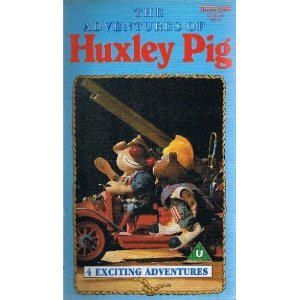
Huxley Pig. The infamous character from Rodney Peppe's book (Huxley Pig Series).. Unfortunately I can't find the original book any more and instead only seem to find the tv show series, created in 1989-90. Huxley Pig was an amazing character I felt I could relate too, going on adventures- journeys and meeting new friends just like Huxley would do.
Fun Fact: The fact that he was a pig once put me off from eating bacon.. I didn't want Huxley's family to die! (I now eat Bacon again, sorry Huxley)
Children Book Characters, analysis
Two inspring quotes that will help create my characters for the book..
“The most important thing about building a character is to start on the inside… and layer on all the different qualities that make the person unique.”
- Ellen Wittlinger
This quote will help me greatly in understanding about creating a character than has a symbolical charm about it. Keeping it unique from other books, I want the characters design to predominately control the overall aesthetics too the whole stories design (Backgrounds/Objects etc)
“The two most important things to have in a picture book character are uniqueness and relatability… Finding the balance between those two is the trick to creating a really strong character with potential longevity."
- Crystal Allen
This is what sparks my creativity and plugs my mind.. I want to make a character that CHILDREN CAN RELATE TOO.
I don't want it to become too much of a cliché for the character literally forming everyday aspects of children's lives.. But I want to pick up on certain aspects and draw from situations that used to make me feel uncomfortable when I was a child from Northern England.
“The most important thing about building a character is to start on the inside… and layer on all the different qualities that make the person unique.”
- Ellen Wittlinger
This quote will help me greatly in understanding about creating a character than has a symbolical charm about it. Keeping it unique from other books, I want the characters design to predominately control the overall aesthetics too the whole stories design (Backgrounds/Objects etc)
“The two most important things to have in a picture book character are uniqueness and relatability… Finding the balance between those two is the trick to creating a really strong character with potential longevity."
- Crystal Allen
This is what sparks my creativity and plugs my mind.. I want to make a character that CHILDREN CAN RELATE TOO.
I don't want it to become too much of a cliché for the character literally forming everyday aspects of children's lives.. But I want to pick up on certain aspects and draw from situations that used to make me feel uncomfortable when I was a child from Northern England.
Picture Book Characters
Creating Believable Characters in Children's Books by Robyn Opie
If you've read my previous articles on writing for children you'll be aware that I've defined children's books as books that feature a child as the main character and the target audience is children.
So, let's take a look at children as characters.
In picture books, no description of the characters is necessary. Picture books are highly visual and therefore all characters are obvious from the illustrations. When writing picture books, you have a limited number of words to work with (less than 1,000) and you can't afford to waste words on unnecessary description.
The same can be said of easy readers and chapter books. These books still contain plenty of illustrations and a limited word count. Description should be restricted to what is essential to the plot.
For example, if you're writing about a child who is bothered by their appearance - wearing glasses or being too small - then a limited amount of description is necessary.
A general guideline when writing these shorter books for young children is to only include what is essential for the story to make sense.
To make your character seem real to the reader you must think of him or her as a real person. People are around us every day. It's useful to take bits and pieces from the people we know to create our characters. Be careful to always mix and match. Never use an entire person in a novel. That person may not appreciate it.
When writing for children - or any type of fiction - it's best to avoid stereotypes. They are boring and unimaginative. They are an example of lazy writing. Be creative.
A character comes alive through their actions and dialogue. Actions, in particular, will show a character's personality. What they do and how they react largely depends on their personality, background and experience.
For example, a child who has been bitten by a dog will react differently when confronted by a strange dog than a child who has never experienced this trauma.
Believable characters always act consistently.
For example, in my book Working Like a Dog, Lucia wants new rollerblades. Her parents won't buy them for her. She must save the money herself or go without. So Lucia decides to start a dog-walking service to earn money for new rollerblades. Later in the story Lucia loses two of the dogs. She worries about the dogs and spends a lot of time searching for them.
The action in this story shows Lucia's character. She's a likeable responsible young lady. She is prepared to earn the money to buy new rollerblades. She could have stolen the money or rollerblades. She could have bullied other children for their lunch money. She could have nagged her grandmother into giving her money or rollerblades.
When she loses the dogs, she could have left them to find their own way home. She could have lied to the owners about losing them.
Lucia is responsible when she decides to earn money to buy her own rollerblades. When she loses the dogs she is responsible and searches for them until she finds them.
Lucia acts consistently and her behaviour is believable.
Imagine if Lucia decided to lie to the dog owners about knowing what happened to their precious pooches. She could say that the dogs were missing when she went to walk them. This element of the plot would probably be hard to swallow considering what we already know about Lucia. She would suddenly seem unbelievable.
It is essential to know what your character wants - their motivation. And why they want it. Your character's goal must be something that readers can relate to and care about.
Your readers must care about your character and be interested in their plight. Otherwise there is a good chance they'll put your book down and never return to it.
You, the writer, must care about your character. If you don't care about him or her then you can't expect your readers to care either. To care about your character you need to know him or her well.
Sometimes writers use a habit or habits in an attempt to make a character appear real. Habits can take the form of action and dialogue. Maybe a character chews their nails or adds the word "like" to the beginning of too many sentences or wears a particular type of clothing.
Be careful when giving your characters habits. Too many habits can distract the reader from your story and become an annoyance.
When writing for children, characters should be kept to a minimum. Too many characters can confuse our young readers.
As children's books become longer and your audience older, there is more room for character development. But it is important to remember that every word in your children's book should be essential to the plot.
So, let's take a look at children as characters.
In picture books, no description of the characters is necessary. Picture books are highly visual and therefore all characters are obvious from the illustrations. When writing picture books, you have a limited number of words to work with (less than 1,000) and you can't afford to waste words on unnecessary description.
The same can be said of easy readers and chapter books. These books still contain plenty of illustrations and a limited word count. Description should be restricted to what is essential to the plot.
For example, if you're writing about a child who is bothered by their appearance - wearing glasses or being too small - then a limited amount of description is necessary.
A general guideline when writing these shorter books for young children is to only include what is essential for the story to make sense.
To make your character seem real to the reader you must think of him or her as a real person. People are around us every day. It's useful to take bits and pieces from the people we know to create our characters. Be careful to always mix and match. Never use an entire person in a novel. That person may not appreciate it.
When writing for children - or any type of fiction - it's best to avoid stereotypes. They are boring and unimaginative. They are an example of lazy writing. Be creative.
A character comes alive through their actions and dialogue. Actions, in particular, will show a character's personality. What they do and how they react largely depends on their personality, background and experience.
For example, a child who has been bitten by a dog will react differently when confronted by a strange dog than a child who has never experienced this trauma.
Believable characters always act consistently.
For example, in my book Working Like a Dog, Lucia wants new rollerblades. Her parents won't buy them for her. She must save the money herself or go without. So Lucia decides to start a dog-walking service to earn money for new rollerblades. Later in the story Lucia loses two of the dogs. She worries about the dogs and spends a lot of time searching for them.
The action in this story shows Lucia's character. She's a likeable responsible young lady. She is prepared to earn the money to buy new rollerblades. She could have stolen the money or rollerblades. She could have bullied other children for their lunch money. She could have nagged her grandmother into giving her money or rollerblades.
When she loses the dogs, she could have left them to find their own way home. She could have lied to the owners about losing them.
Lucia is responsible when she decides to earn money to buy her own rollerblades. When she loses the dogs she is responsible and searches for them until she finds them.
Lucia acts consistently and her behaviour is believable.
Imagine if Lucia decided to lie to the dog owners about knowing what happened to their precious pooches. She could say that the dogs were missing when she went to walk them. This element of the plot would probably be hard to swallow considering what we already know about Lucia. She would suddenly seem unbelievable.
It is essential to know what your character wants - their motivation. And why they want it. Your character's goal must be something that readers can relate to and care about.
Your readers must care about your character and be interested in their plight. Otherwise there is a good chance they'll put your book down and never return to it.
You, the writer, must care about your character. If you don't care about him or her then you can't expect your readers to care either. To care about your character you need to know him or her well.
Sometimes writers use a habit or habits in an attempt to make a character appear real. Habits can take the form of action and dialogue. Maybe a character chews their nails or adds the word "like" to the beginning of too many sentences or wears a particular type of clothing.
Be careful when giving your characters habits. Too many habits can distract the reader from your story and become an annoyance.
When writing for children, characters should be kept to a minimum. Too many characters can confuse our young readers.
As children's books become longer and your audience older, there is more room for character development. But it is important to remember that every word in your children's book should be essential to the plot.
Erik Erikson - Child Development Psychology
Child Psychology, often referred to as Child Development, examines the
psychological aspects that occur during childhood (from birth to puberty). An
incredible number of changes occur during childhood, especially during infancy,
which lasts from birth to age two. In particular, there are massive advances in
physical, cognitive, and psychosocial development...all of which are key areas
of study within child psychology.
Erik Erikson stated that children pass through stages of psychosocial
development. Each stage of development has a specific conflict (the conflict is
also the name of the stage) that the child has to overcome before moving to the
next stage. If a child is unable to successfully overcome a particular
conflict, the child will remain stuck at that stage until he or she is able to
resolve that issue. The stages of Erikson's psychosocial development are as
follows...
- Industry vs. Inferiority
occurs from age 6 through puberty. To resolve this conflict, the child
must develop a sense of self-confidence
Back to the drawing board..
Back to the drawing board..
Time to be more in sync with my childhood and to look further in depth at what got me attracted to books as a young'en.
Next stop..
CHARACTERS
Time to be more in sync with my childhood and to look further in depth at what got me attracted to books as a young'en.
Next stop..
CHARACTERS
Initial Rough Ideas (Undeveloped)
Initial Idea 1

An idea of creating a 7-Day Camp Activity Handbook, children will be taking part in activities at Naturebase and this book is more of a theoretical approach to the design solution. Showing step by step elements on how to complete tasks, it would ideally be very infographic influenced.
In order to shake lose the workbook feel as the tasks involved with school, children will be able to feel more in tune with the elements of the book. Bringing in a task meter which gives levels of intensity of 'awesomeness', starting out at the weak scale and ending up to be 'Strong & Brave'.
Initial Idea 2

Similar to the first idea, I created a similar design, again trying to less delve into the educational side of things, I wanted to create a book design that would give children a sense of power/achievement with an informative experience.
A points incentive extra would be offered within this book. Upon completion of tasks, the children would gain points which could then be replenished for incentives. Almost like applying goals and expectations upon receiving them (Much like children will experience as they develop and grow older)
Book Initial Decisions (Sizing)
Sizing
A4
Pros
Cons
Pros
A4
Pros
- Much nicer to see Artwork bigger
- Children need a bigger visual space to capture all that's going on within the pages
- Easy to read with children sat next to adult. If adult is reading it to them.
Cons
- Book would need to printed on A3 paper (Costly)
- Not easy to transport by hand (Children) Would need a bag to carry
- Not quite as personal as a pocket A5 book
- Bigger the book, potential to be ruined/ripped (Less toughness?)
A5
Pros
- Smaller size, can fit in children's pocket when on the move
- Easier to transport
- Almost like a little journal type book for children to relate too (sizing)
Cons
- Text is much smaller, not suitable for children's eyes/attention
- Less content can be produced on the page
- Smaller the size, the less valuable the item feels
Size Chosen - A5
I have decided to choose to create the book in an A5 format (Printed on A4). The reason behind this is due to the brief overall, Children will be taking their book into harsher conditions than the environment of home, the book will need to be quite durable and portable, while still having that personal 'jewel' interest. I want to avoid making the book seem like a school book, and separate children's expectation from the work like tasks of Naturebase, and show them it's not like school teaches. The book size compromise shouldn't be too much of a problem. As the book will be for children, there hands are much smaller than adult hands and their field of view (FOV) will be much closer to the book due to illusions of their natural body size/hand size.
Guardian (Nature Deficit Disorder)
Why our children need to get outside and engage with nature
More and more children today have less and less contact with the natural world. And this is having a huge impact on their health and development
Cows hibernate in winter, grey squirrels are native to this country, conkers come from oak (or maybe beech, or is it fir?) trees, and of course there's no such thing as a leaf that can soothe a nettle sting. Or so, according to a new survey, believe between a quarter and a half of all British children. You can't really blame them: if, like 64% of kids today, you played outside less than once a week, or were one of the 28% who haven't been on a country walk in the last year, the 21% who've never been to a farm and the 20% who have never once climbed a tree, you wouldn't know much about nature either.
The survey, of 2,000 eight-to-12-year-olds for the TV channel Eden, is the latest in a string of similar studies over the last couple of years: more children can identify a Dalek than an owl; a big majority play indoors more often than out. The distance our kids stray from home on their own has shrunk by 90% since the 70s; 43% of adults think a child shouldn't play outdoors unsupervised until the age of 14. More children are now admitted to British hospitals for injuries incurred falling out of bed than falling out of trees.
Does any of this matter? In an age of cable TV, Nintendos, Facebook and YouTube, is it actually important to be able to tell catkins from cow parsley, or jackdaws from jays? Well, it obviously can't do any harm to know a bit about the natural world beyond the screen and the front door. And if, as a result of that, you develop a love for nature, you may care something for its survival, which is probably no bad thing.
But a growing body of evidence is starting to show that it's not so much what children know about nature that's important, as what happens to them when they are in nature (and not just in it, but in it by themselves, without grownups). Respectable scientists – doctors, mental health experts, educationalists, sociologists – are beginning to suggest that when kids stop going out into the natural world to play, it can affect not just their development as individuals, but society as a whole.
"There's a paradox," says Stephen Moss, naturalist, broadcaster and author. "More kids today are interested in the natural world than ever before; they watch it on the telly, they may well visit a nature reserve or a National Trust site with their families. But far fewer are experiencing it directly, on their own or with their friends, and that's what counts: this is about more than nature."
The American writer Richard Louv, author of the bestseller Last Child in the Woods, has defined the phenomenon as "nature deficit disorder". Something "very profound" has happened to children's relationship with nature over the last couple of decades, he says, for a number of reasons. Technology, obviously, is one: a recent report from the Kaiser FamilyFoundation in the US found that the average eight-to-18-year-old American now spends more than 53 hours a week "using entertainment media".
Then there's the fact that children's time is much more pressured than it once was. Spare time must be spent constructively: after-school activities, coaching, organised sports – no time for kicking your heels outdoors. Except kids never did really kick their heels. "I was out on my own and with my friends all the time, from the age of about eight," says Moss, now 50. "Climbing trees, building dens, collecting birds' eggs and frogspawn. Today, parents don't even want their kids to get dirty."
But the biggest obstacles to today's children being allowed out in this way (or even to the nearest park or patch of wasteground) stem more from anxiety than squeamishness. "Stranger danger", the fear of abduction by an unknown adult, is why most parents won't allow kids out unsupervised. Blanket media coverage of the few such incidents that do occur may have contributed to this; in fact, there is a risk but it's minimal – the chance of a child being killed by a stranger in Britain is, literally, one in a million, and has been since the 70s. "A far more serious issue, a massive issue in fact, is traffic," says Moss. "That has grown exponentially, and it's a very real problem."
It's a problem we need to address, because the consequences of failing to allow our children to play independently outside are beginning to make themselves felt. On the website childrenandnature.org, Louv cites a lengthening list of scientific studies indicating that time spent in free play in the natural world – a free-range childhood, perhaps – has a huge impact on health.
Obesity is perhaps the most visible symptom of the lack of such play, but literally dozens of studies from around the world show regular time outdoors produces significant improvements in attention deficit hyperactivity disorder, learning ability, creativity and mental, psychological and emotional wellbeing.
Just five minutes' "green exercise" can produce rapid improvements in mental wellbeing and self-esteem, with the greatest benefits experienced by the young, according to a study this year at the University of Essex.
Free and unstructured play in the outdoors boosts problem-solving skills, focus and self-discipline. Socially, it improves cooperation, flexibility, and self-awareness. Emotional benefits include reduced aggression and increased happiness. "Children will be smarter, better able to get along with others, healthier and happier when they have regular opportunities for free and unstructured play in the out-of-doors," concluded one authoritative study published by the American Medical Association in 2005.
"Nature is a tool," says Moss, "to get children to experience not just the wider world, but themselves." So climbing a tree, he says, is about "learning how to take responsibility for yourself, and how – crucially – to measure risk for yourself. Falling out of a tree is a very good lesson in risk and reward."
Ask anyone over 40 to recount their most treasured memories of childhood play, and few will be indoors. Fewer still will involve an adult. Independent play, outdoors and far from grown-up eyes, is what we remember. As things stand, today's children will be unlikely to treasure memories like that: 21% of today's kids regularly play outside, compared with 71% of their parents.
The picture isn't entirely bleak, though. In the US, nature deficit disorder is big news: Louv is delivering the keynote speech at the American Academy of Pediatrics' annual conference; city parks departments are joining with local health services to prescribe "outdoor time" for problem children. Here, organisations such as the RSPB, National Trust and Natural England are "moving mountains" to get families outdoors, Moss says. Often, though, this remains what he calls a "mediated experience" – dictated by adults.
One project, in Somerset, could show the way ahead. Two years ago the Somerset Play and Participation Service, a voluntary sector scheme run by children's charity Barnardo's in collaboration with a local authorities and a number of natural environment agencies, began putting time and money into encouraging children to play independently outdoors. Part of the scheme is a website, somersetoutdoorplay.org.uk, detailing more than 30 sites across the county, from hilltops to forests and headlands to beaches, where kids can play unsupervised.
"We aim for children to experience true free play," says Kristen Lambert, who runs the scheme's PlayRanger service. "Play that's not set up according to an adult agenda – in forests and open spaces, not designated play areas. There are no specific activities, no fixed equipment; there are tree branches and muddy slopes. The spaces themselves are inspiring. Children set their own challenges, assess their own risks, take their own responsibility, have their own adventures, and learn from them. And what they learn can't be taught. You should see them."
- http://www.guardian.co.uk/lifeandstyle/2010/aug/16/childre-nature-outside-play-health
------------------------------------
This is a really interesting article- come to think of it.. Even when I was younger, I didn't venture into the outside world as much as i'd liked (perhaps it was due to having games consoles at the time!). Although I cant really imagine it has affected me as such at all, today there is quite a high number of medical obesity cases within children, if children are to be persuaded to venture out then a healthy lifestyle would be more likely and the rate of overweight children would drop.
Randolph Caldecott - On Book Design
Randolph Caldecott was the man
who painted the backdrop to nicely turned-out Victorian childhood. From 1870 no
well-furnished home was complete without a set of his visual renditions of
popular nursery rhymes including "The House that Jack Built" and
"Sing a Song for Sixpence", as well as some that no longer trip off
the tongue, such as "The Three Jovial Huntsmen". What's more, with
colour lithographic printing becoming cheap and easy as the decade progressed,
Caldecott's picture books pushed steadily into the mass market so that, by the
time of his early death in 1886, his work was a fixture in homes that couldn't
boast a set of proper bookshelves, let alone a nursery.
A Caldecott picture is
immediately recognisable, although you might not to be able to name it as such.
The setting is historical, usually late 18th century, although sometimes as
early as Queen Anne (the elegant yet childishly symmetrical houses in the background
are a clue). Middle-aged men wear dusty wigs, younger ones strut in breeches
and stockings. Milkmaids have mob caps while prosperous matrons wear their
silken fortunes on plump backs. The colour palette tends to the autumnal,
although it is not as muted as that of Caldecott's contemporary Kate Greenaway.
While his three jovial huntsmen may charge across a landscape already washed
out by the dying sun, the interior scenes in "The Queen of Hearts"
have enough rich jewel tones to satisfy even the most exacting young
monarchist. His bold use of white space only makes the colours sing louder.
Where Caldecott particularly
excels is in scenes of mayhem. Everyone is on the go, from the cow with the
crumpled horn which tosses the dog in "The House that Jack Built" to
the Queen of Hearts who, celebrating the return of her tarts, dances with a
swerving, light-toed King of Clubs. Just as alive are the background figures,
the spectators to all this palaver. Children hang down precariously from
branches or stick their heads through railings in order to get a better look. A
maidservant drops a jug in surprise at the sudden appearance of the
four-and-twenty musical blackbirds bursting out of the pie, while a host of
rabbits look on in nervous astonishment as Baby Bunting is paraded past them in
his skinned-rabbit costume, ears and all.
Beatrix Potter's father
presented her early on with books by Caldecott, and you can spot the influence
immediately. The pointing cat in his Queen of Hearts is surely the model for
that brilliant moment of terror when a petrified Tom Kitten confronts Samuel
Whiskers, while the dancing pigs in "Hey Diddle Diddle" look as if
they have been reworked in The Tale of Pigling Bland. But one area in which
Caldecott and Potter stayed far apart was in their capacity for casual cruelty.
In Potter's dark world, rabbit dads get put in pies and eaten, and foxes move
into other peoples' homes without asking. In Caldecott's work, the moments of
death are few and mostly take place off the page (for instance, when the cat
kills the mouse in "The House that Jack Built"). When asked to
illustrate "Sing a Song for Sixpence", the tender-hearted Caldecott
worried that children might be traumatised by believing that the maid had
permanently lost her nose to the blackbird. So he added a final line about the
arrival of a Jenny Wren "who popped it on again".
None of which means that there
is anything sentimental or soft-focused about Caldecott's landscapes. Having
spent his early working life in rural Shropshire, he knew exactly what a
ploughed field looks like and how a cow bucks when forced to carry a human
passenger. His dust looks as if it would coat your throat, and you can almost
smell his pigs. If his characters are decked out in clothes of nearly a century
earlier, those waistcoats and breeches and lace shawls have been informed by a
sharp antiquarian eye. The faces may be a little generic - the children, in
particular, are all the dimpled same - but the costumes carry the tang of the
particular.
One of Caldecott's great gifts
to the genre of children's books was to insist upon unifying the design, making
sure that the title page and even the endpapers were as pretty and witty as the
colour plates. This reproduction of nine of his picture books from the Huntingdon
Library has been put together with equal care and attention. Beautifully
produced, and without a dull or redundant page anywhere, this edition will make
a handsome Christmas present for anyone who, once upon a time, longed to live
in a world where a dish really might run away with a spoon. Kathryn Hughes's
biography of Mrs Beeton is published by Harper Perennial.
---------------------------------------------------------------
Caldecott is a great inspiration to book design, I feel a lot of work really opens my eyes to how important design within Children's books work. It's not just about creating something with visual beauty, but there is a lot of effort that goes into semiotics of design.
His inspiration is great, seeing as he grew up experiencing landscapes, a lot of his design inspiration so far has been improved by taking my work environment into the world outside. Being from Manchester (Aswell as me) I know that there are some great landscapes in the North that help inspire me.
---------------------------------------------------------------
Caldecott is a great inspiration to book design, I feel a lot of work really opens my eyes to how important design within Children's books work. It's not just about creating something with visual beauty, but there is a lot of effort that goes into semiotics of design.
His inspiration is great, seeing as he grew up experiencing landscapes, a lot of his design inspiration so far has been improved by taking my work environment into the world outside. Being from Manchester (Aswell as me) I know that there are some great landscapes in the North that help inspire me.
Paul & Emma Rand - Sparkle & Spin/Little 1
Sparkle & Spin

Originally published in 1961, this exuberant picture book was illustrated and designed by Paul Rand, one of the most influential graphic designers of the twentieth century. The text by Ann Rand is filled with clever wordplay and not only tells the engaging story of Little 1 and his quest for a friend, but makes learning numbers and simple addition positively fun.
Little 1

Through harmony and rhythm, resonance and pitch, Ann Rand inspires readers to listen to the tuneful play of her text as it sings off each page. Illustrated with graphic designer Paul Rand's colorful, witty artwork,Sparkle and Spin is a children's classic (now happily available again through Chronicle Books) that reveals to young readers the power and music in the words they use every day.
"Paul Rand did not set out to create classic children's books, he simply wanted to make pictures that were playful. Like the alchemist of old, he transformed unlikely abstract forms into icons that inspired children and adults and laid the foundation for two books that have indeed become children's classics."
Steven Heller, author of Paul Rand
Steven Heller, author of Paul Rand
Subscribe to:
Comments (Atom)